
Clearing land may seem straightforward, but it's one of the most important and risk-sensitive steps in the entire construction process. Whether you're planning to build a custom home near the Connecticut shoreline or preparing a multi-acre lot for future development, how you clear your land can directly impact the safety, cost, and success of your project.
On Connecticut’s shoreline, clearing land involves more than removing trees. It’s about preparing a property to handle complex terrain, drainage concerns, and environmental regulations from the ground up. This guide explains what site clearing involves, what can go wrong when it’s rushed, how the process works step by step, and what’s different on shoreline lots.
What Is Site Clearing, and Why Is It More Than Tree Removal?
Land clearing is often underestimated. It’s not just about creating space; it’s about creating a stable, accessible, and compliant site that supports every future phase of construction.
A properly cleared site should:
Remove all vegetation and obstacles without compromising soil health
Account for future excavation, grading, and utility access
Comply with town and environmental regulations, especially near wetlands
Prepare the land for erosion control and water drainage
When site clearing is done poorly or rushed, it often results in unexpected project delays, structural problems, or even legal issues down the line. That’s why K.E. Braza’s approach focuses on strategy as much as it does on equipment.
Common Issues That Arise from Inadequate Clearing
Before looking at the process, it’s worth understanding what can go wrong when site clearing is treated as an afterthought:
Drainage problems from improper grading or failure to remove root systems
Unstable foundations caused by buried stumps, boulders, or organic debris left in the soil
Flooding or erosion on shoreline or sloped properties
Permit violations due to unregulated tree or brush removal in protected areas
Delays in excavation from inaccessible terrain or leftover obstructions
These problems not only cause frustration but they also increase project costs and reduce property value over time. A clear and properly prepped site helps ensure a smooth building process, and more importantly, a structurally sound result. For example, foundation issues caused by improper site prep can result in costly future repairs.
What Does a Site Clearing Contractor Do?
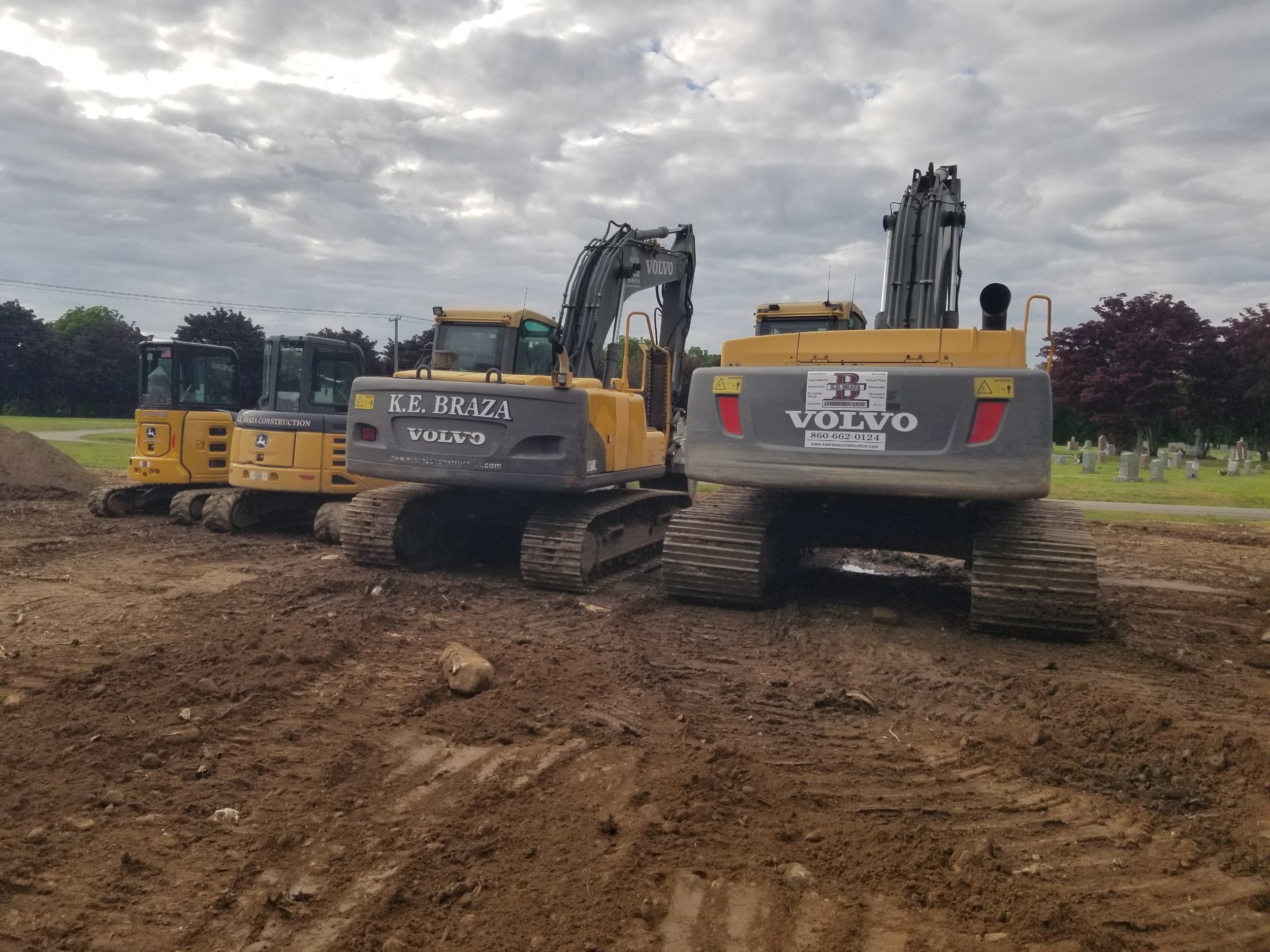
A site clearing contractor removes what stands in the way of construction: trees and stumps, brush and invasive plants, rock and ledge, and small structures. On larger commercial and development projects, clearing can also cover multiple lots, subdivisions, access roads and rights-of-way, so each cleared area is ready for grading, trenching, or staging.
Many homeowners come to us after dealing with overgrowth, uneven terrain, or idle properties. Clearing these lots is about more than improving appearance. It ensures that your land is safe, usable, and ready for permits or foundation work. To understand how this ties into long-term property performance, check out our blog on foundation construction for home additions in CT.
Why Brush and Invasive Plants Matter
Overgrown lots are more than just unsightly; they can be dangerous. Brush can harbor pests, block utility access, and even increase wildfire risk during dry seasons.
Clearing brush can include removing small trees, vines, weeds, and invasive species like bittersweet or knotweed.
Clearing brush properly also helps prevent future regrowth and makes ongoing landscape maintenance more manageable.
How to Clear a Construction Site, Step by Step
Understanding the full scope of a professional land clearing process can help you avoid costly surprises and delays. Here’s how a typical project runs, from the first site walk to a stabilized, build-ready site.
Step 1: Site Evaluation and Planning
Every job starts with a comprehensive site walk. We assess the land’s topography, identify visible and hidden obstacles, and discuss the goals for your property. Whether the land is heavily wooded or only mildly overgrown, each site presents unique needs based on location, slope, drainage patterns, and proximity to wetlands.
This planning stage allows us to anticipate potential challenges and choose the right equipment and strategy from the start.
Step 2: Permits
Depending on the town and location, clearing land may require approval from local or state agencies, especially in coastal or environmentally sensitive areas, and work should follow local regulations and DEEP guidelines where applicable. K.E. Braza Construction does not obtain permits on behalf of property owners, so make sure the required permits are in place before work is scheduled.
Step 3: Clearing and Excavation
Once the plan is approved, our team begins the clearing phase. We remove all designated trees, stumps, brush, rocks, debris, and existing structures using heavy-duty, low-impact machinery designed for precision and efficiency. For areas with ledge or boulder presence, we use excavation techniques that minimize disruption to the surrounding land.
We also coordinate safe haul-away and disposal of materials, separating anything that can be recycled or reused. This approach reduces waste and supports sustainable building practices.
Step 4: Grading and Site Stabilization
After the land is cleared, we grade and level the site to prepare for construction. This step is essential in managing water flow and preventing erosion, especially on sloped or waterfront properties. We implement drainage plans where needed and can install erosion control measures like silt fencing or seeding to maintain site integrity until construction begins. You can also read how proper grading helps in hurricane preparedness and flood prevention.
Clearing Shoreline and Flood-Zone Lots: What’s Different
Building near the water presents unique challenges, including limited access, fragile ecosystems, and the risk of flooding. As a shoreline-focused contractor, K.E. Braza understands the specific techniques and precautions required to clear lots near Connecticut’s rivers, lakes, and coastal zones.
We regularly work with properties in flood zones, along ledge formations, or in areas with strict environmental buffers. Our experience allows us to approach these jobs with precision, ensuring not just compliance but long-term buildability. Whether you’re clearing for a dock, seawall, or elevated home foundation, our shoreline expertise makes all the difference.
Preventative Planning: The Long-Term Value of Professional Clearing
One of the most overlooked advantages of proper site clearing is how it prevents issues that can emerge long after construction is complete. Homes built on poorly cleared lots are more likely to experience:
Water pooling near the foundation
Cracking slabs from hidden organic material in the soil
Regrowth that affects utility lines or septic systems
Soil shifting or erosion after storms
By thoroughly preparing land at the start, property owners can avoid future repairs, maintain better drainage, and protect their investment over time. It’s not just about what’s removed; it’s about what’s left behind: stable, safe, and ready-to-build ground. Learn more about our site clearing and excavation services in Connecticut.
Frequently Asked Questions
Is land clearing always required before building?
In most cases, yes. Even seemingly clear lots often contain stumps, uneven terrain, or vegetation that will interfere with excavation or foundation work. Proper clearing ensures your builder can begin without obstruction.
How long does site clearing take?
It depends on the site. Timelines vary with the size of the lot, how much vegetation, rock and ledge has to come out, soil conditions, weather, and any permits the town or state requires.
Start Clearing with Confidence
At K.E. Braza Construction, we’ve built our reputation on helping Connecticut property owners start their projects the right way. With a deep understanding of shoreline environments, proper equipment for every terrain, and over 25 years of experience navigating local regulations, we clear land not just quickly, but carefully, legally, and strategically.
If you're preparing land for a home, dock, or development in Eastern CT or along the shoreline, we’re here to help you take the first step with clarity and confidence.